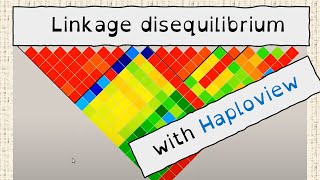
A hands-on study path in practical SNP data analysis, in collaboration with Gabor Meszaros.
The Molecular Genomics lecture series explains why genomic selection, diversity assessment and variant discovery work. The Genomics Boot Camp, created by Gabor Meszaros, teaches you to actually do it: handle real SNP genotype files, run PLINK, work in R, quality-control your data and analyse population structure. Both come from the same author and are meant to be taken together; ASAP-Bio hosts the theory and links the practice.
Work down the study path in order. Each boot camp chapter links to the relevant part of Gabor's open-access book and to his video walkthrough. The panels on either side show which ASAP-Bio course prepares you for that step, and which course it unlocks. Everything here is free and open access.
Three stages. Do not skip stage 1: almost every problem learners hit in PLINK is really a gap in genetics vocabulary or file handling, not a software problem.
You should be comfortable with what a SNP, an allele, a genotype and linkage disequilibrium actually are. The Molecular Genomics lecture series is the direct theory companion to this boot camp: it covers the same subject matter, in the same order, from the concepts rather than the commands. Take the first five lectures before you open PLINK.
If you also want the underlying quantitative genetics, or a broader introduction to animal breeding, these cover it.
Gabor's book and videos, in his own order. Chapters 1–5 are setup, 6–9 are the real analysis.
Why file naming, file paths and a tidy working directory matter. Dull, and the single biggest source of later errors.
A proper text editor and sane file management before any genomics tool is installed.
Installing and launching PLINK, the tool used for essentially all downstream work in this path.
The environment you will use to script PLINK runs and to plot results.
What is actually inside a PLINK binary fileset: individuals, SNP positions and the genotypes themselves. The most important chapter for avoiding silent errors later.
PLINK options, the ped and map formats, converting between formats, and driving PLINK from R.
Missingness per SNP and per individual, minor allele frequency, Hardy–Weinberg, and when it is legitimate to skip a filter. This chapter is a prerequisite for trustworthy genomic prediction.
Running and, more importantly, correctly interpreting a PCA of SNP data, including comparison with published results.
Once you can quality-control a genotype file and read a PCA, these courses stop being abstract. Each link goes to the specific module the boot camp skills feed into.
The later Molecular Genomics lectures are the theory behind the analyses you can now run.
The Genomics Boot Camp is created and maintained by Gabor Meszaros. It comprises an open-access book and a YouTube channel covering practical genomic data analysis for beginners, with a focus on SNP data. Because DNA is fundamentally similar across livestock, humans, microbes and plants, the methods transfer directly to whichever species you work on.
The book is published under a Creative Commons Attribution-NonCommercial-NoDerivs 4.0 licence. ASAP-Bio links to the original materials rather than copying them, so you always get Gabor's latest version.